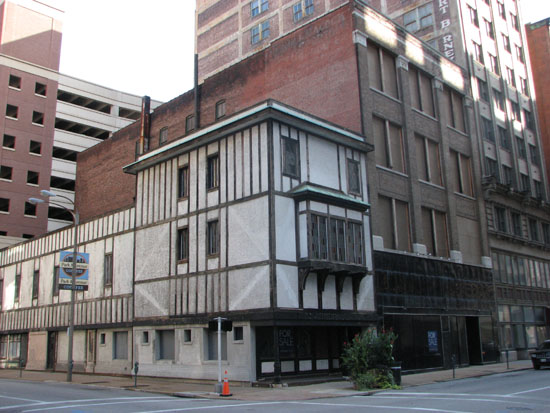
On June 4th, 2026, executive director Stuart Keating spoke with Elaine Cha of St. Louis on the Air about Landmarks’ mission to advocate for the preservation of St. Louis’ historical built environment. More specifically, the interview featured details on the annual Landmarks event The Most Enhanced Awards Ceremony which took place on Thursday, May 28th at The Sheldon. During the ceremony, Landmarks honored thirteen outstanding projects for their exceptional efforts in the preservation, rehabilitation, and adaptive reuse of buildings and spaces throughout St. Louis. This year’s winners included commercial buildings, private residences, and park pavilions, reflecting ongoing investment in the preservation and reuse of St. Louis’ historic built environment.
You can listen to the full interview here:
Since 1996, The Most Enhanced Awards has recognized excellence in the restoration, rehabilitation, and adaptive reuse of St. Louis’ architectural heritage. Award winners are selected based on the difficulty of the project, the capacity of the project to have a transformational effect on its surrounding area, the historical or architectural significance of the building, and the project’s power to inspire. They are also selected with an eye toward diversity of building types, geographical areas, and development entities.
Landmarks Association of St. Louis congratulates all the award winners and thanks them for their contributions to the preservation and revitalization of St. Louis’ historic buildings. We look forward to continuing to celebrate their efforts in the future.
The 13 award recipients for 2026 are (in order of presentation):
4111 McRee Avenue
McRee House
Owner: HBD McRee, LLC
Architect: Bemberg Architecture
Contractor: HBD McRee, LLC
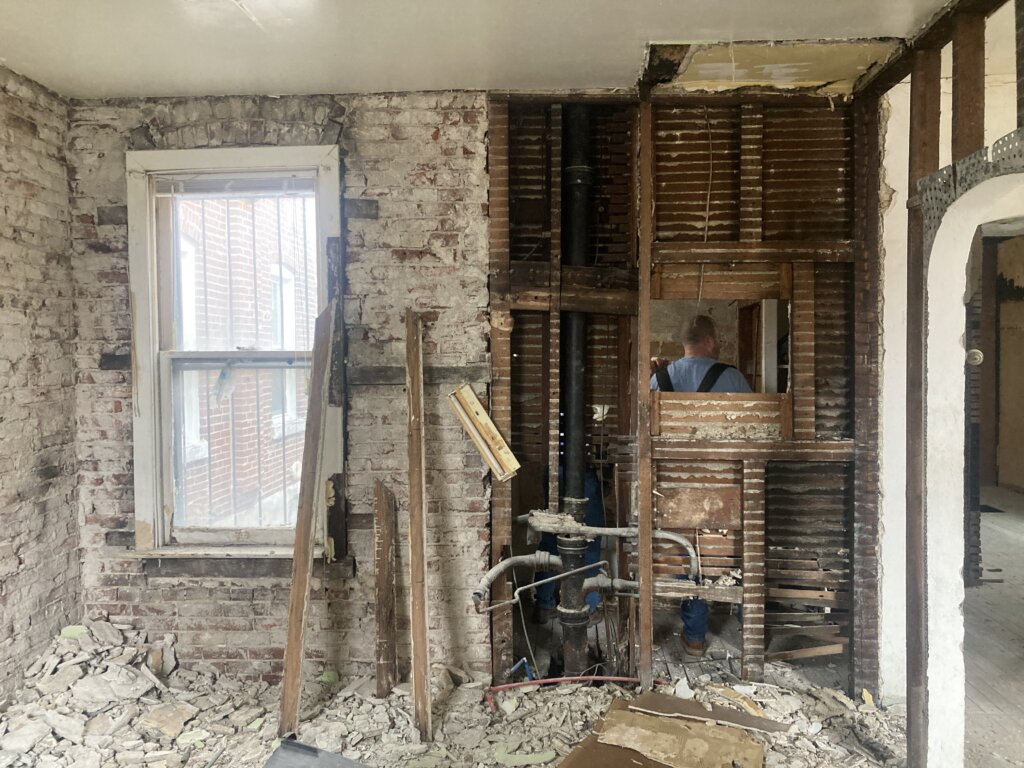
Constructed in 1909, the residence at 4111 McRee Avenue is a modest yet character-defining example of early 20th-century working-class housing in St. Louis’s Tiffany neighborhood.
Built during the period of significance associated with the nearby Liggett & Myers industrial complex, the home reflects the dense residential fabric that developed to support the area’s industrial workforce. The property contributes to the broader Liggett & Myers Historic District, recognized for its role in the city’s industrial and community development history.
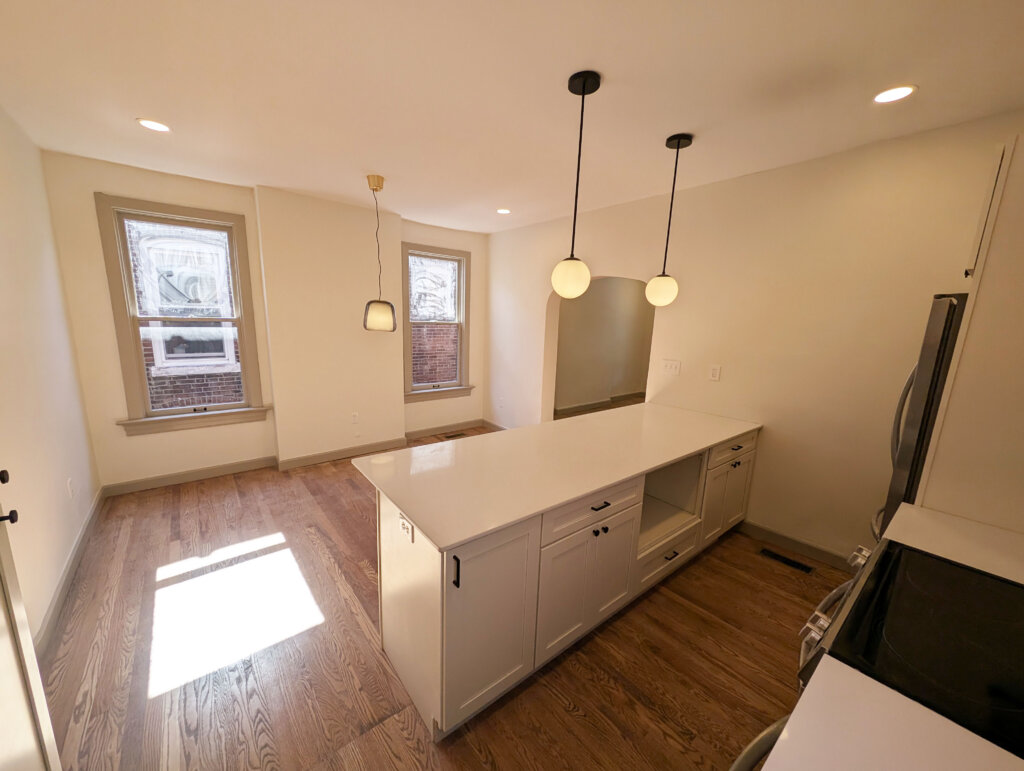
Architecturally, the structure retains key elements of its original form, including its simple brick massing, raised entry, and characteristic interior organization. The traditional “shotgun” spatial sequence—extending from the front living spaces to the rear of the house—remains legible, along with original features such as arched openings and hardwood flooring in primary rooms.
The proposed rehabilitation preserved and restored these defining features while removing non-original alterations. Exterior work focused on maintaining historic character through masonry repair, restoration of transom openings, and installation of historically appropriate wood windows and doors. Interior interventions prioritized retention of original spatial relationships while introducing reversible modifications to support contemporary use.
Through this approach, the project reinforces the building’s historic integrity while ensuring its continued viability, contributing to the ongoing preservation and reinvestment in the Tiffany neighborhood.
504 Newstead Avenue
Noteworthy Café
Owner: Jackson Pianos
Architect: Bemberg Architecture
Contractor: Jackson Piano
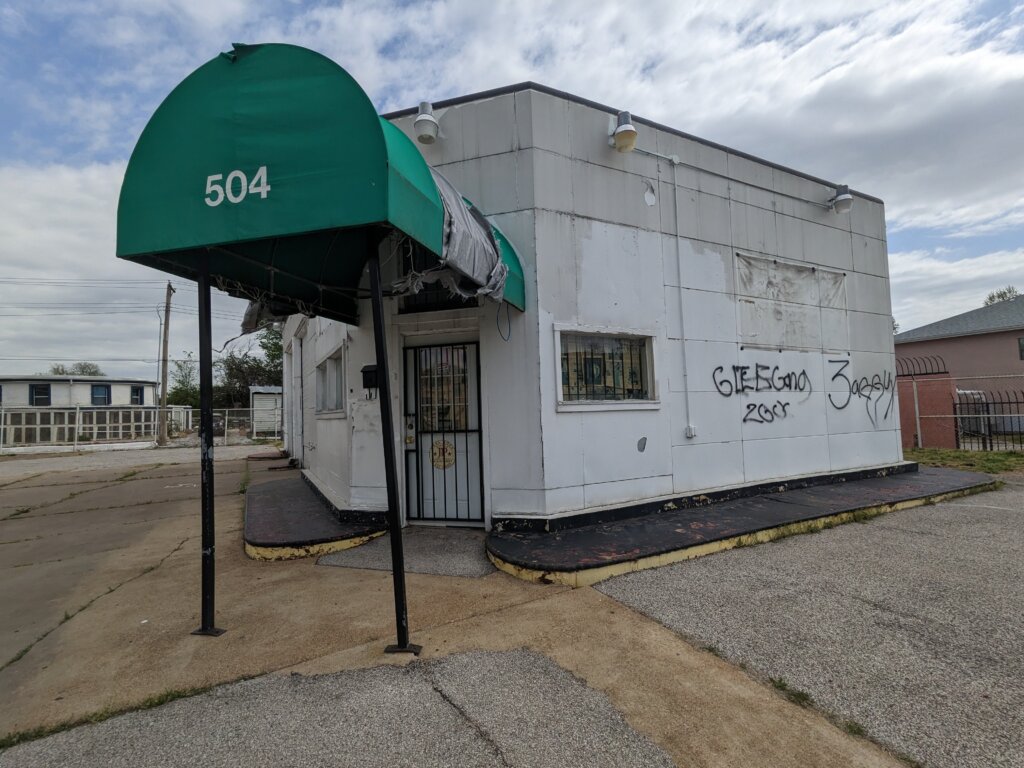
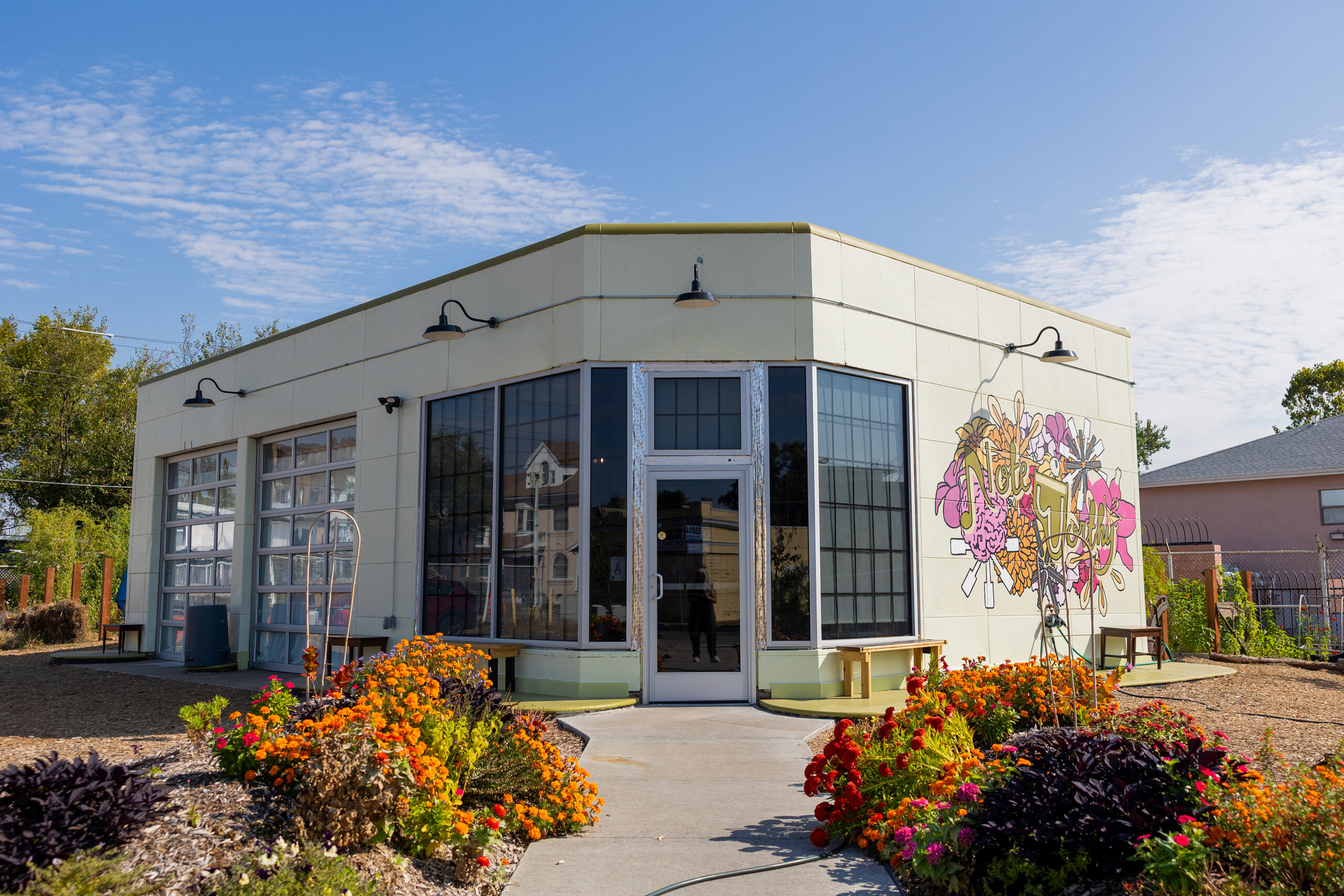
A long-vacant Standard Oil service station—once marked by cracked pavement, boarded openings, and deferred maintenance—has been restored as a vibrant neighborhood gathering place.
The project transforms a modest but character-defining commercial structure into Noteworthy Café, a piano café and yoga studio rooted in preservation, community, and everyday use.
The former office, once enclosed and opaque, was selectively opened with new glazing to bring daylight deep into the interior and reconnect the space to the street. This area now functions as the café—intimate in scale, active at the corner, and visibly engaged with the neighborhood.
The former service bays, historically the most active portion of the building, have been adaptively reused as a flexible performance and studio space. The original garage openings were retained and reinterpreted as operable thresholds, allowing the space to open fully to the outdoors.
The surrounding site—once dominated by asphalt—has been reclaimed as a series of public garden spaces. Permeable surfaces, native plantings, and informal seating transform the former forecourt into a landscape for gathering. A contemporary mural adds a layer of cultural expression without obscuring the building’s underlying form.
Repair is prioritized over replacement; new elements are simple, durable, and clearly contemporary. The result is not a reimagining, but a careful evolution—one that respects the building’s past while enabling new life. Noteworthy Café demonstrates the value of preserving everyday commercial architecture. What was once a place of service and transit is now a place of connection, culture, and continuity within the neighborhood.
2500 Ohio Avenue
The Koken on Ohio
Owner: 2500 Ohio, LLC
Architect: Blackline Design and Construction
Contractor: Blackline Design and Construction
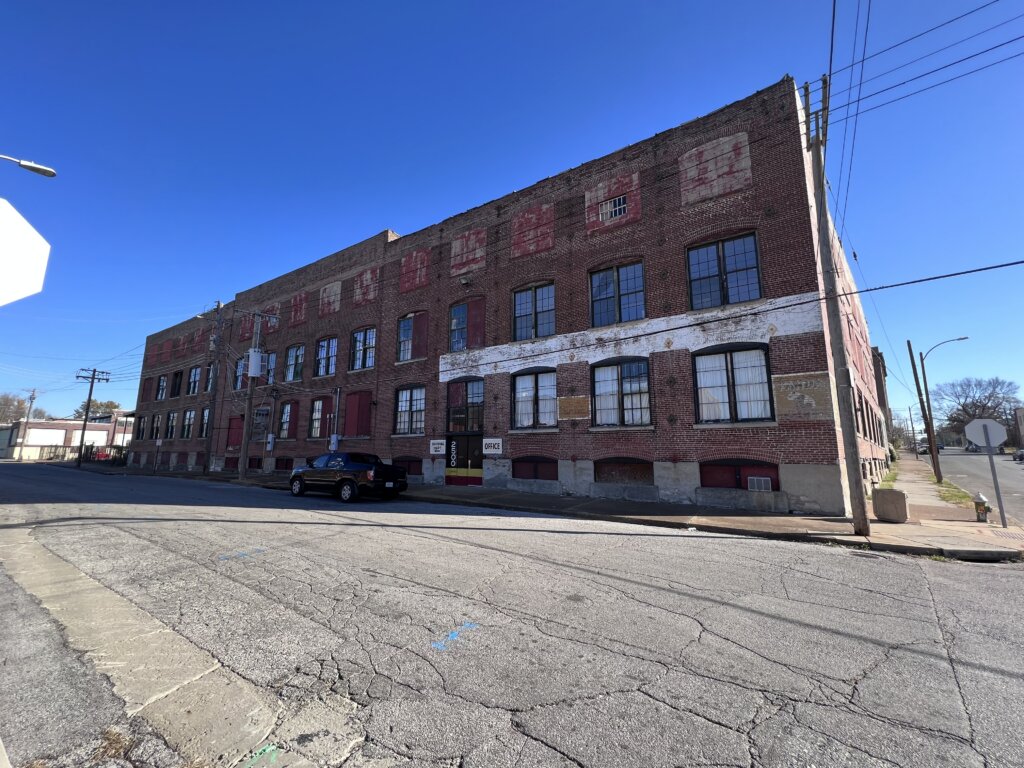
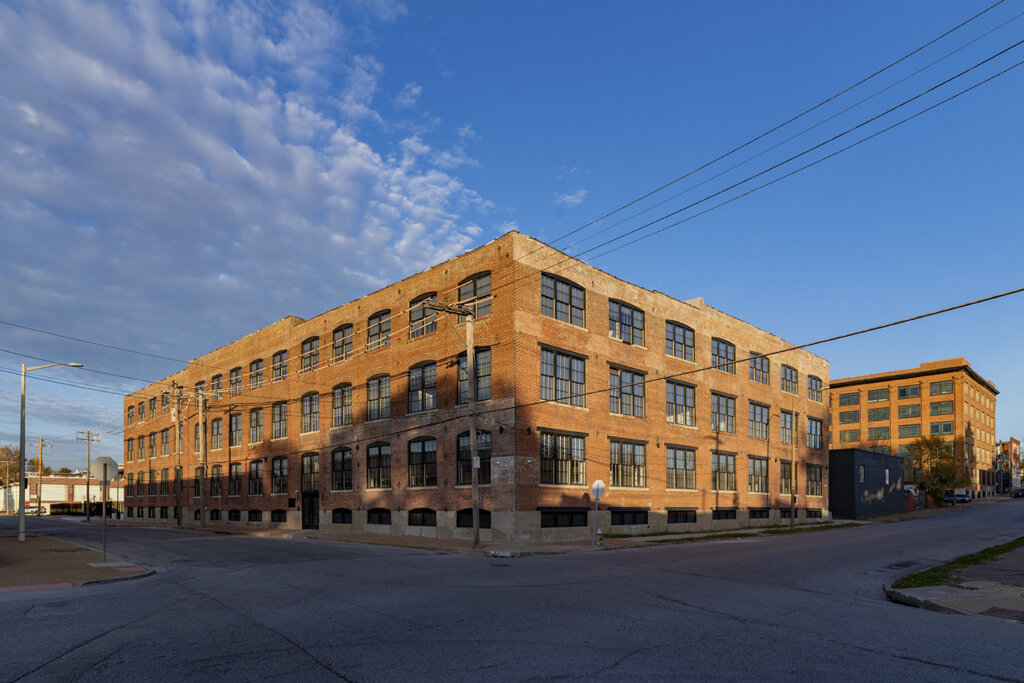
Established in St. Louis by German-born Ernest Edward Koken, the company began in 1874 as a small firm specializing in hand-painted shaving mugs.
Shortly after the firm moved into the original building at the southeast comer of Ohio and Sidney Streets in 1892, E. E. Koken began manufacturing an early, if not the earliest American barber chair powered by a hydraulic mechanism. Koken’s patented hydraulic chair became the flagship of the firm’s numerous products that propelled the company into an industry leader.
By 1926, the company had outgrown the Ohio Street complex and moved to a new 15-acre plant (largely razed) a few miles southwest. Over the years, the building was occupied by the Panda Paints company, and most recently has an event space and artist studios.
Today, the property has been reimagined into 65 residential units and 14 artist studios with amenity spaces and a private courtyard.
3221-3223 Olive Boulevard
The Key
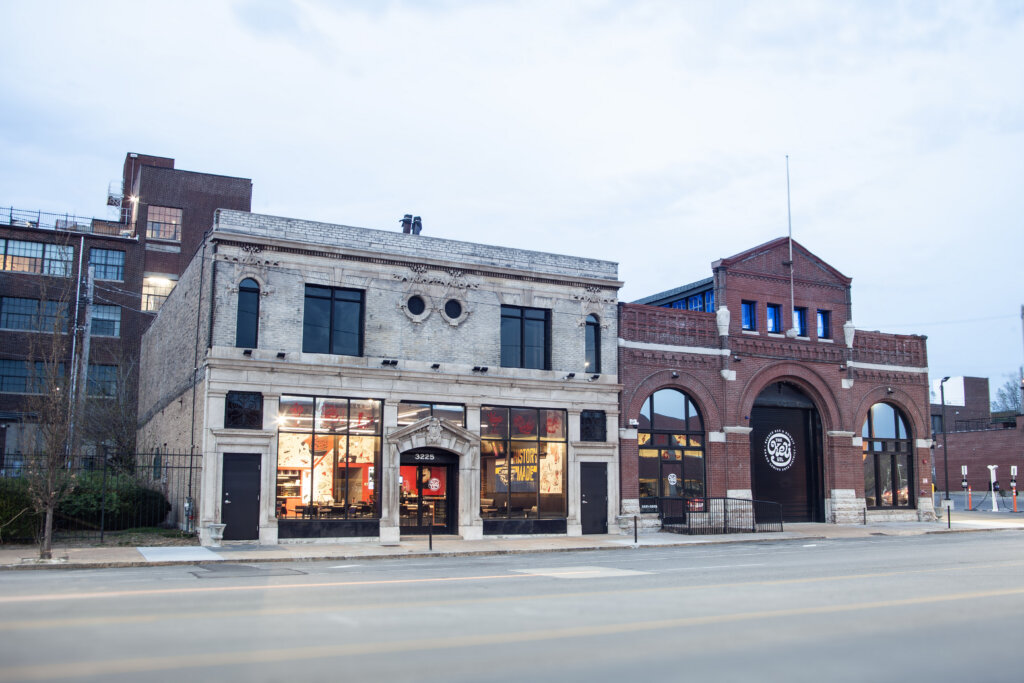
Owner: Kranzberg Arts Fountation
Architect: AVVA-A
Contractor: Harambee Construction
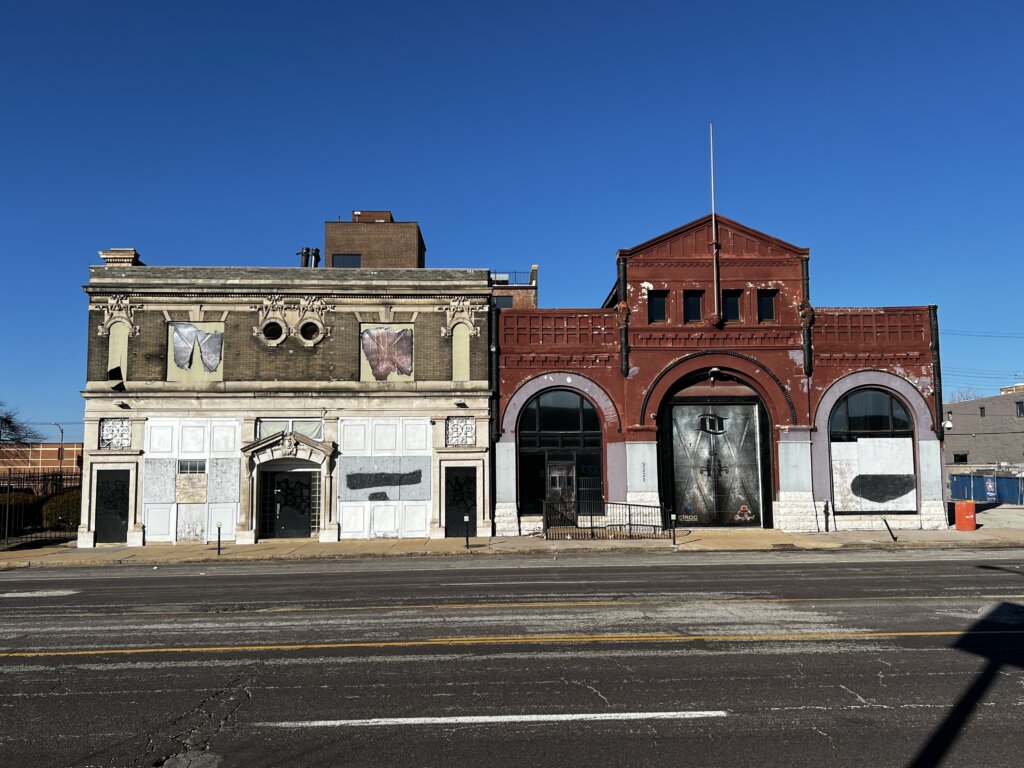
This two building complex, consisting of a market building and a hardware store, was threatened with demolition by SLU when Landmarks Association intervened, finding an end-user for the building in Kranzberg Arts Foundation. We are thrilled to see KAF restore these buildings and adapt them to modern use.
The market consists of a large central hall with ornate wood and steel trusses topped by a clerestory. The renovation tuckpointed the brick inside and out while removing old paint from the exterior. Windows were repaired or replaced. The clerestory windows were replaced with custom hardwood sashes.
The hardware store is a two-story building with a basement. The second floor was apartments. The ground floor was renovated, the stamped tin ceilings were cleaned and renovated and new linear light fixtures highlight the ceiling, which was painted silver to enhance the embossed pattern. The floors were sanded and repaired as necessary. The exterior was tuckpointed as needed and the brick cleaned. New windows were installed on the second floor. The south facade of the ground floor has storefront windows that follow the rhythm from the historic photos.
The Key Music Venue & Restaurant juxtaposes the historic architecture of a pair of century-old buildings with a contemporary intervention. The design adapts the former market into a vibrant music hall, nodding to the existing structure’s ornate wood trusses and stamped tin ceilings by creating linear patterned elements that dart through the space and juxtapose a series of angled surfaces.
The clerestory windows high above flood the space with natural light during the day, while at night, they and the adjacent ornamental beams are illuminated with the vibrant glow of colorful lights for evening shows.
Adjacent to the music venue, the design continues into a restaurant, connected through a cohesive atmosphere created by the angled surfaces and suspended linear lights. The restaurant ceiling retains its original stamped tin panels, with electrical conduits and light fixtures organized at the perimeter, highlighting the coffered metal ceiling’s intricate patterning.
The restaurant and bar borrow from the aesthetics of local dives, drawing in residents as well as audiences before or after a show. This integration of historic and modern elements aims to create a new cultural hub that caters to both regular patrons and visitors.
1201 Mackay Place
Owner: Superior Holdings, LLC
Architect: Link Architecture
Contractor: Superior Construction Group
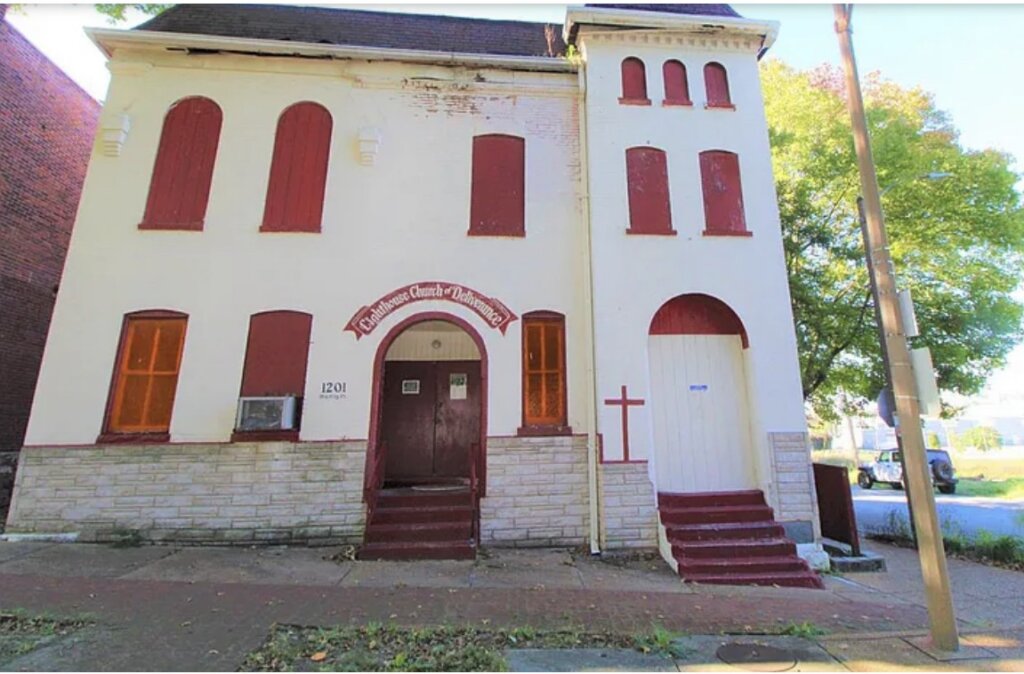
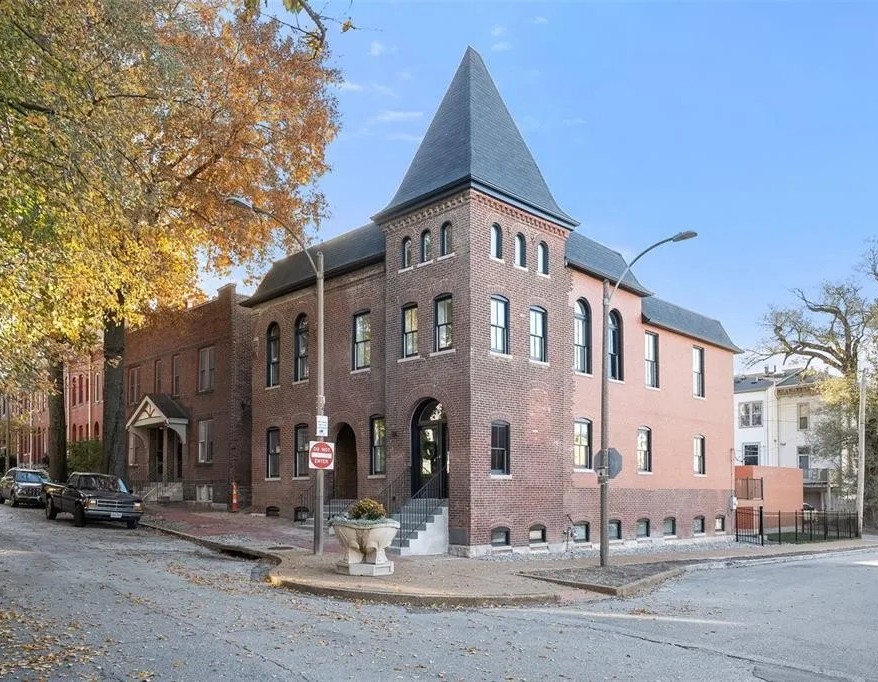
1201-03 Mackay, originally constructed as the Congregational Mission Church, is the smallest and most modest of the original church buildings in Lafayette Square.
After the closure of the Lighthouse Deliverance Church of God the building sat vacant for approximately 20 years and was condemned by the city in 2022. The roof and much of the interior had collapsed prior to the purchase by the developer.
This restoration was the most daunting project of the owner’s nearly 30 years in the construction industry. All of the framing was compromised from long-term water infiltration. Several masonry walls collapsed during construction. The roof structure, including the pyramidal tower had to be completely reframed; masonry walls were rebuilt and a second floor was added to the rearmost section of the building.
All new interior finishes were added to make these beautiful and unique townhouses just a few steps from Lafayette Park.
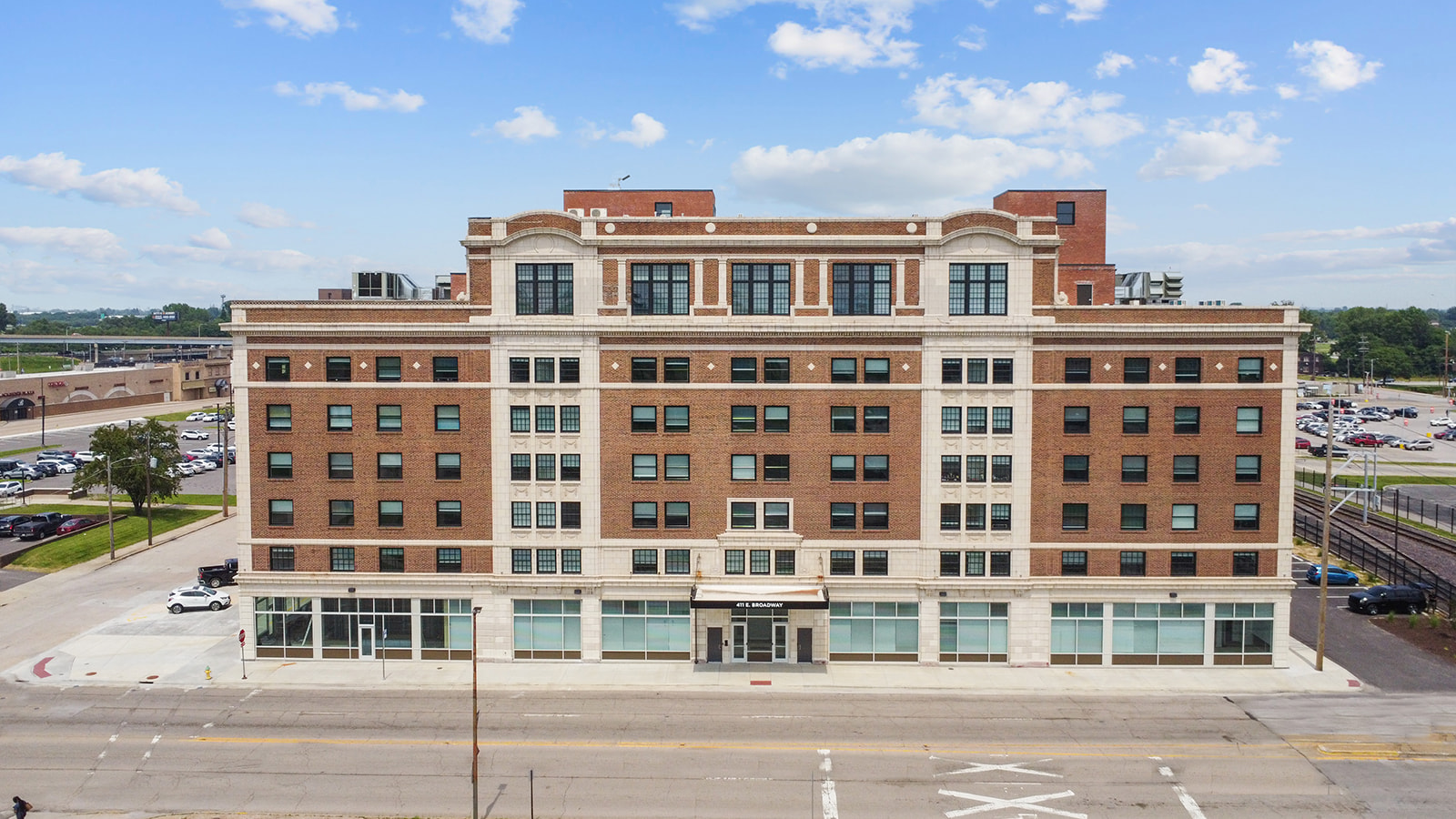
411 E. Broadway
The New Broadview
Owner: Yaphett El-Amin
Architect: Roseman and Associates
Contractor: Altman Charter Company
Construction Manager: Kwame Building Group, Inc.
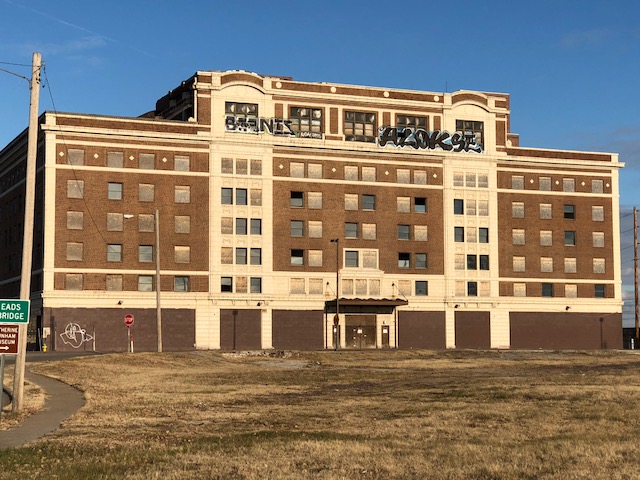
In 1927, the doors of the Broadview Hotel opened—and with them, a new chapter for East St. Louis. Rising seven stories above the city, the hotel was the place to be.
Designed in the elegant Classical Revival style by Arthur J. Widmer, Broadview boasted 260 guest rooms, a restaurant, a rooftop garden, and a grand ballroom that pulsed with life. Inside its walls, deals were made, celebrations unfolded, and voices traveled far beyond the city through its role as home to the area’s first radio station, WIL.
Today, through the strategic use of Historic Tax Credits, Federal and State Low-Income Housing Tax Credits, the support of the Illinois Housing Development Authority (IHDA), and the dedication of a committed development team, the building has been transformed into The New Broadview Apartments—an affordable community for adults aged 55 and older, including veterans.
The 110-unit property stands as a symbol of resilience, offering accessible living options alongside 20,000 square feet of revitalized commercial space. Ideally located just one block from the MetroLink transportation center, the reimagined Broadview reconnects Downtown East St. Louis to key employment hubs on both sides of the river, reinforcing its role as a catalyst for community reinvestment and expanded opportunity.
2831 Chippewa Street
Zelle Mae
Owner: 2831 Chippewa LLC / SouthSide Spaces
Architect: Virescent
Contractor: Arcas, LLC
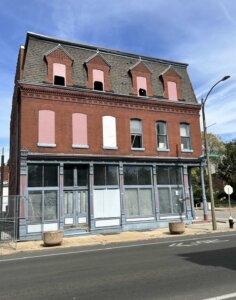
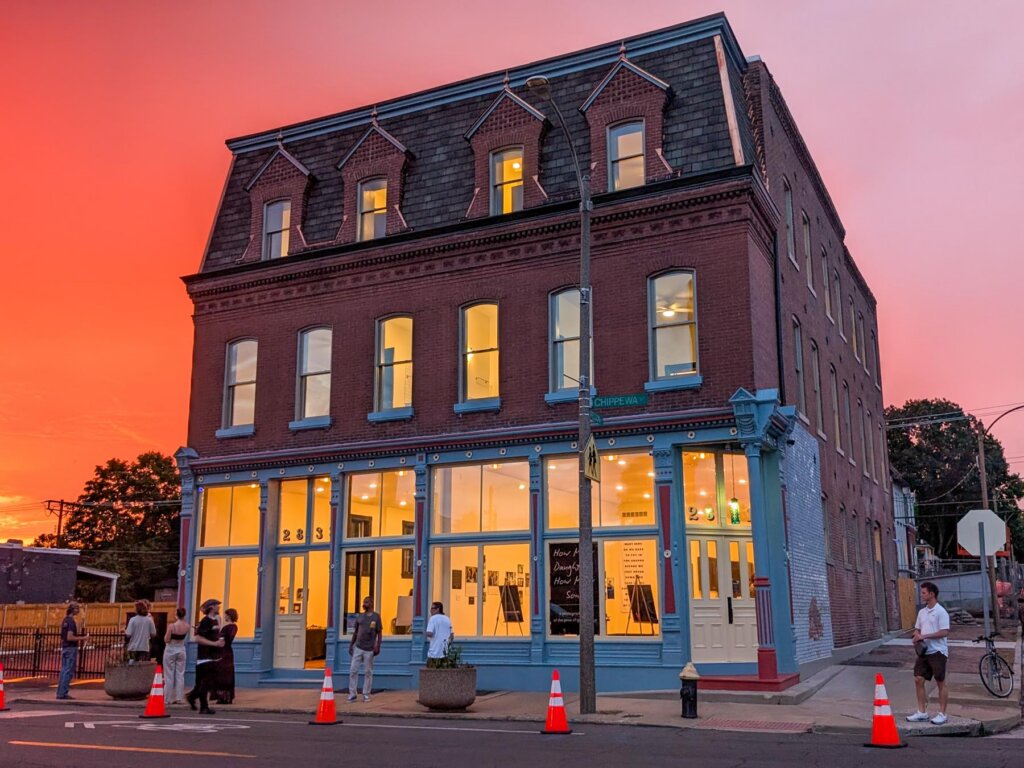
Constructed in 1893 by architect Frederick Meyer, it served as a mix of commercial and residential spaces for decades to come. Frequently home to a furniture retail store, most notably that of famous gospel singers Slim & Zella Mae Cox for several decades until Slim’s death in 2012.
The first floor has two retail spaces, which used to host Slim and Zella Mae Cox’ furniture store, where, according to the jingle, “That little dollar that you got is gonna stretch a long long way.” They also had a recording studio in the back where they broadcast a radio show.
The renovation included a total rehab of the interior, creating 8 apartments on the upper floors and two commercial spaces on the first floor, with hardwood flooring, wooden windows and restored trim work. The exterior of the building has also been lovingly restored, with tuckpointing, painting and excellent window replacement.
718 N. Grand Boulevard
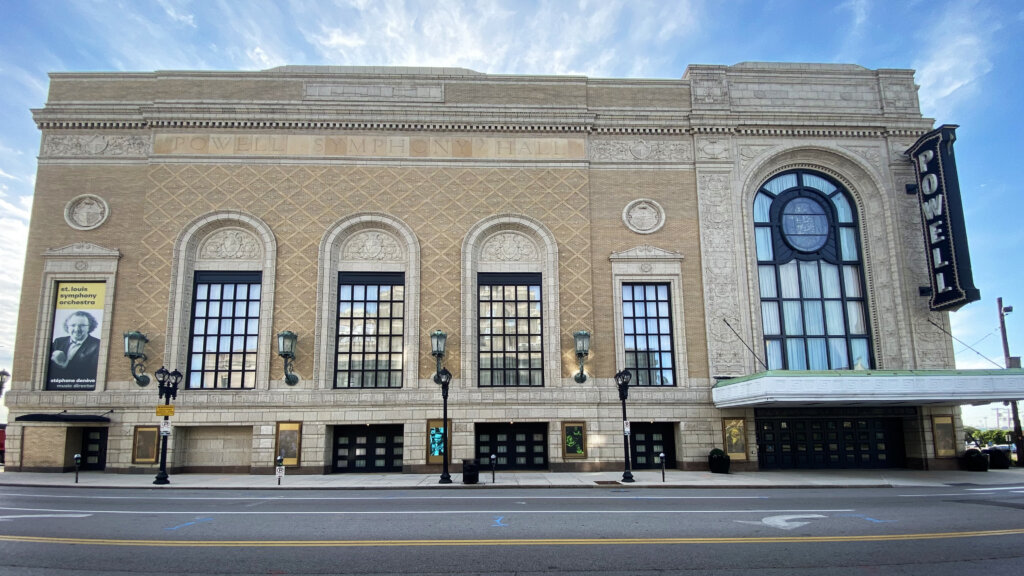
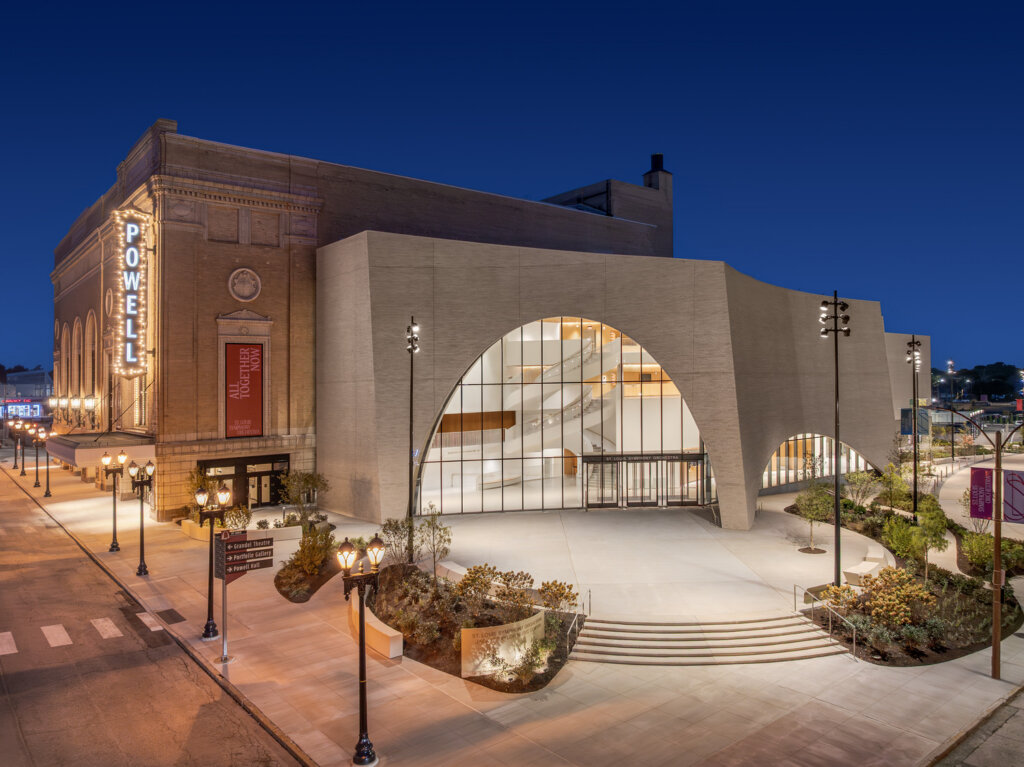
Powell Hall at the Jack C. Taylor Music Center
Owner: St. Louis Symphony Orchestra
Architect: Christner Architects, now a part of CannonDesign
Contractor: BSI Constructors
Originally opened in 1925 as the St. Louis Theatre, the building was designed by the renowned Chicago firm Rapp & Rapp during the golden age of American movie palaces. With its ornate French Renaissance-inspired interiors and a foyer modeled after the royal chapel at Versailles, the theater reflected the grandeur and optimism of the era.
While the performance auditorium has served the Symphony well, the limitations of the footprint of Powell Hall have required extraordinary creativity in supporting a world-class orchestra. The building has always lacked appropriate warm-up and rehearsal space, dressing rooms, recording space and appropriate instrument storage areas.
When the Symphony embarked on their renovation and expansion project in 2019, they were clear that the project must preserve the legacy of Powell Hall while dramatically improving the patron experience and re-imagining the building as a vibrant music center. This necessitated a careful balance of restoring the historic fabric while introducing new architectural elements that clearly belong to our time.
The expansion provides much-needed back-of-house spaces such as instrument storage, warm-up rooms, and a new musicians’ lounge. The project restored and refreshed the lobby and auditorium’s iconic interior, repaired the building envelope, re-introduced street-level transparency that had previously been bricked in, and comprehensively replaced aging infrastructure and outdated building systems.
The interior of the auditorium was sensitively renovated to enhance the patron experience while retaining the beloved character of the historic hall. Improvements included the addition of ADA accessible seating areas, respacing and replacing all seating, increasing leg room, integrating modern audio-visual equipment, and incorporating acoustic improvements.
Historic light fixtures were refurbished or rebuilt, velvet was hand-stitched to the original handrail profiles, finishes were expertly matched and repaired, almost every interior surface was touched with historic details seamlessly recreated so the transition between old and new is imperceptible.
Historically, the building’s brick exterior presented a somewhat imposing face to the city. The new expansion introduces a luminous, glass-filled lobby and additional entrances along Delmar Boulevard, transforming the building into a welcoming civic gateway within the Grand Center Arts District. The architecture itself is an expression that this is a place for music, belonging to the entire community.
1312 Warren Street
Architect: JO & A Architects
Contractor: Habitat for Humanity St. Louis
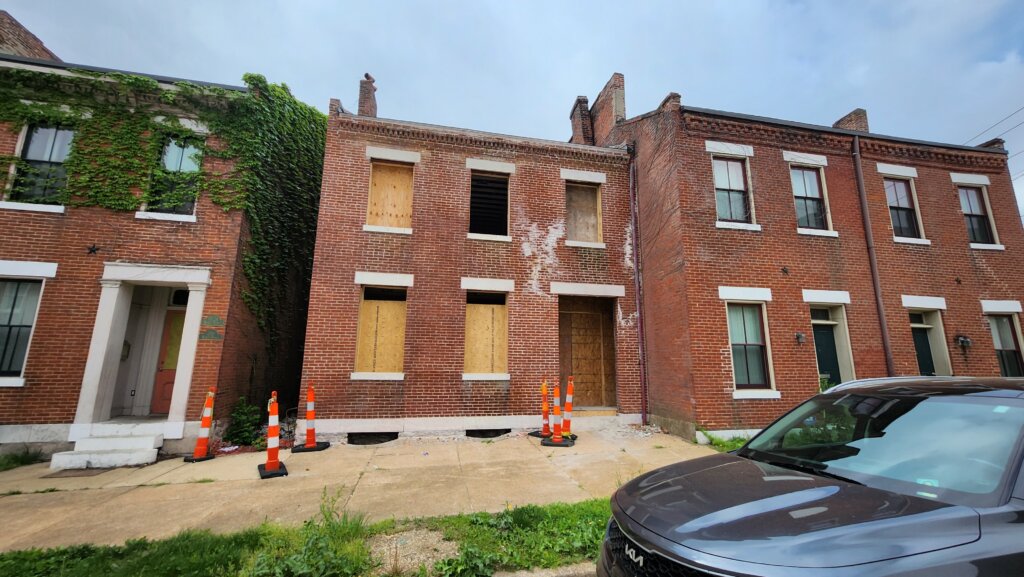
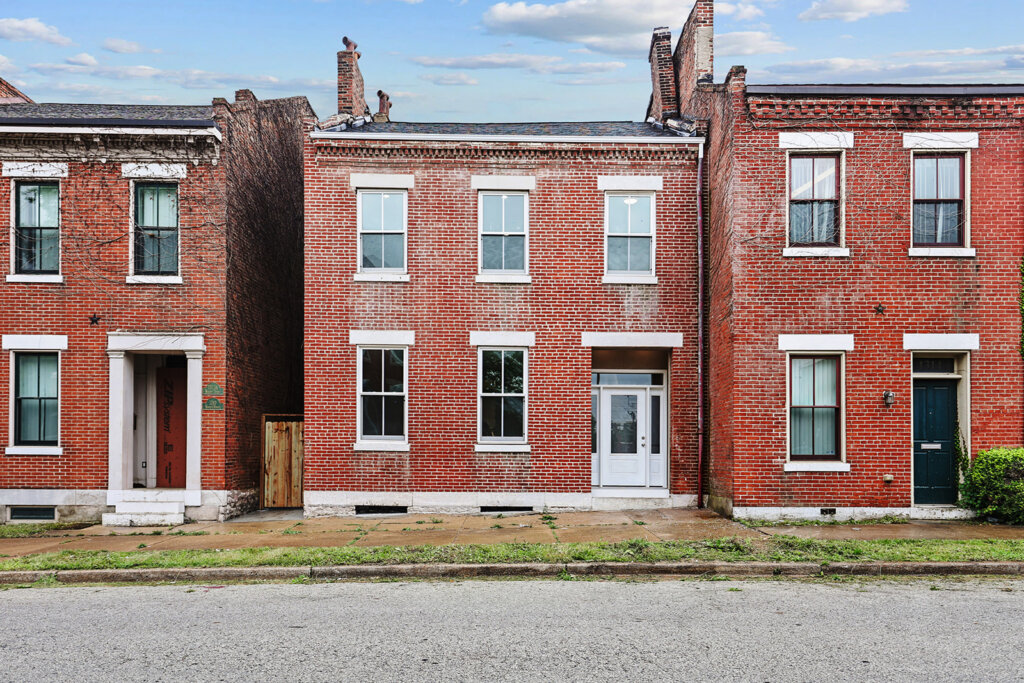
1312 Warren, in Old North St Louis, has been sitting vacant since 2004. The property was acquired in 2008 by the Old North St Louis Restoration Group, and once it was slated for demolition in 2024, they asked Habitat for Humanity Saint Louis to take over the property and restore it.
The architect was JO and A Architecture. While the exterior was serviceable, the interior required a gut rehab.
3427 S. Kingshighway Boulevard
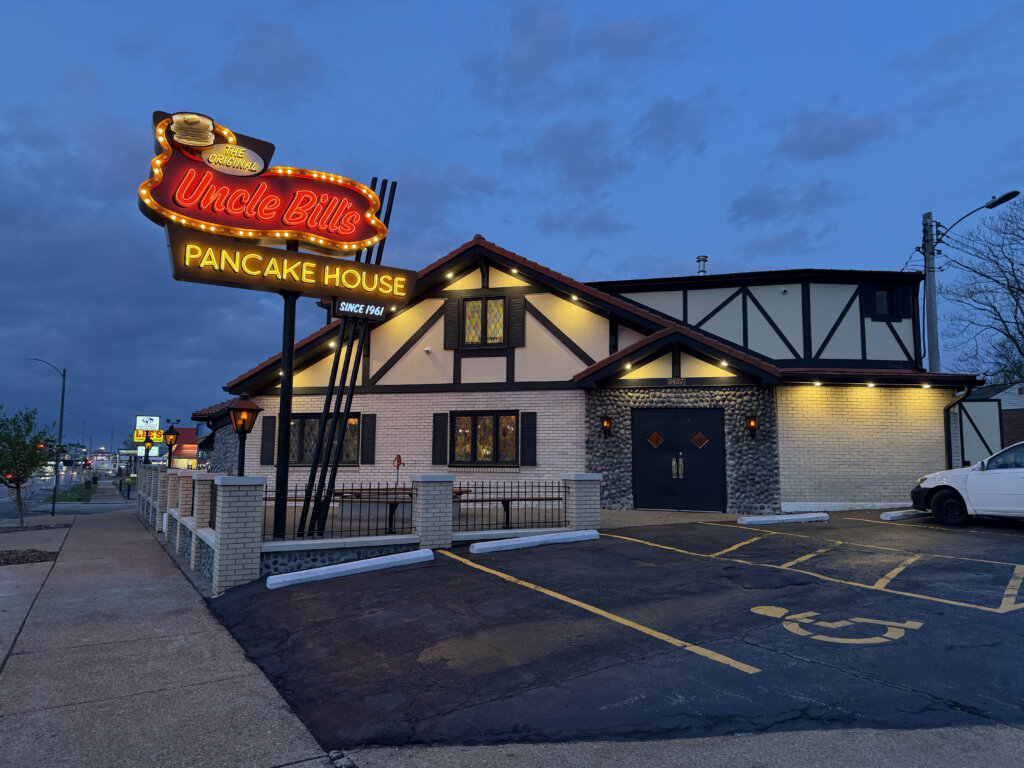
The Original Uncle Bill’s
Owner: Garcia Holdings, LLC
Architect: Garcia Construction
Contractor: Garcia Construction
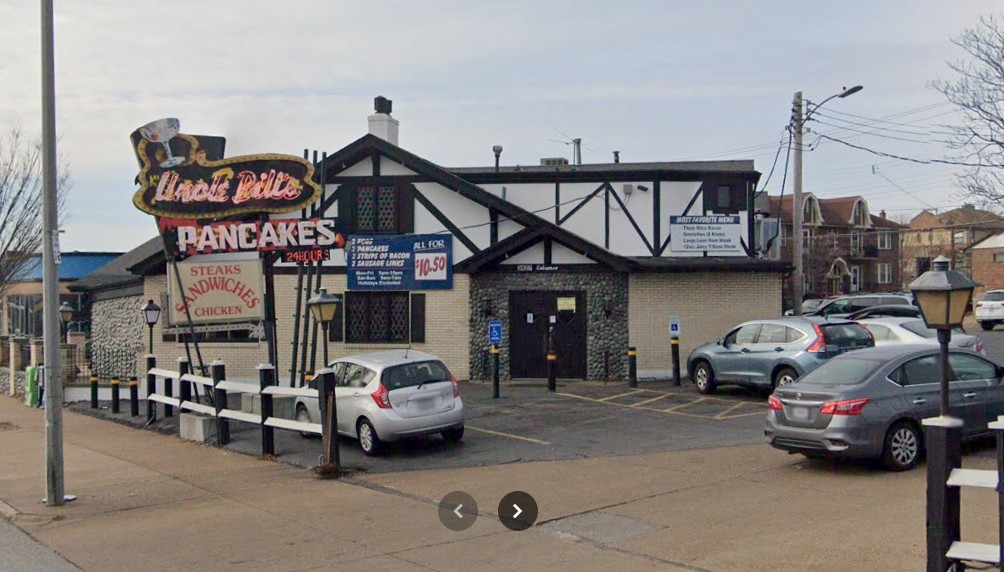
Located on South Kingshighway, Uncle Bill’s Pancake House has been an institution for 65 years.
Constructed by hamburger restaurateur Bill Medart in 1932 as Medart’s Log Cabin, the building features an English-style architectural design with a large chimney and fireplace as the centerpiece.
The Log Cabin changed hands after Bill’s death in 1958 and was briefly an Italian restaurant before being sold to Bill Ernst in 1961. He retooled the restaurant after 24-hour breakfast and dining houses he saw in Las Vegas. He removed alcohol from the menu as well as the sizable bar from the southwest corner and converted it to more seating. However, he retained the architectural charm established by Medart.
The Ernst family sold the building to Bill Choi in the early 1980s, who apparently changed very little with the food, atmosphere, and operations. The restaurant was very profitable and busy for decades, lasting until the pandemic years, from which it did not fully recover. The 24-hour convenience was cut short to only include daytime hours. The owner decided to retire and sell rather than continue.
Garcia Properties took on the project in 2024 and committed to modernizing the restaurant without altering the look and feel. The interior and exterior, while fully modernized, remain true to the Uncle Bill’s Experience.
3435-37 Oregon Avenue
Owner: Mikkael and Charity Ingram, Andrew and Abby Barnes
Contractor: Lintel and Cornice Development and Construction, LLC
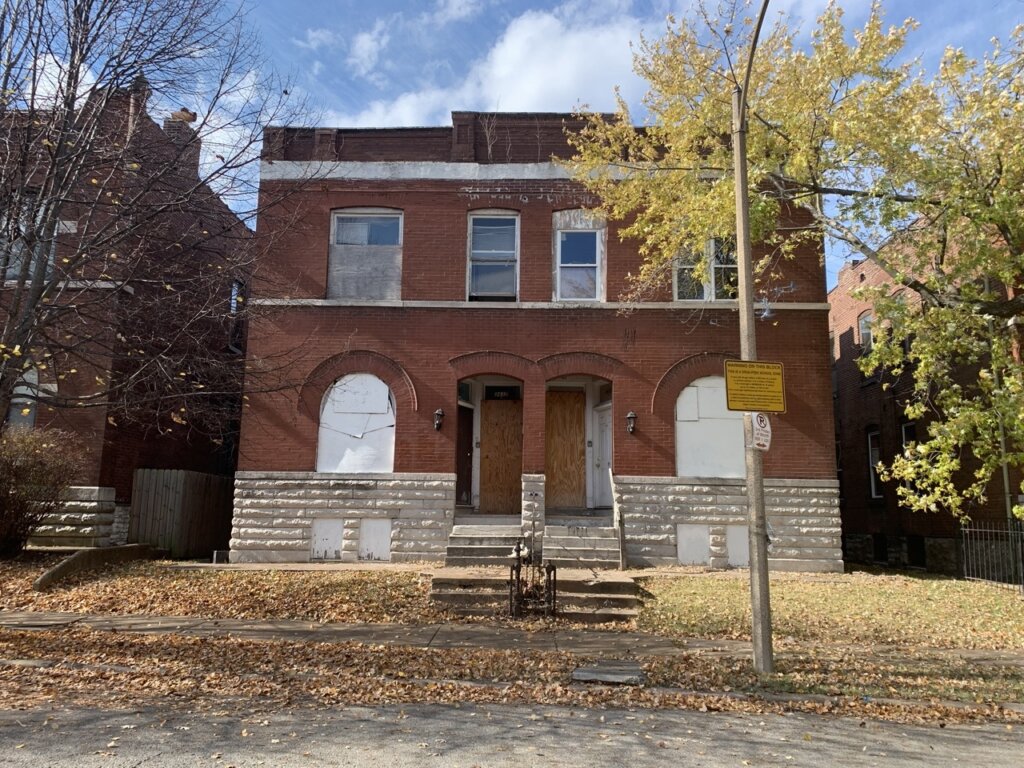
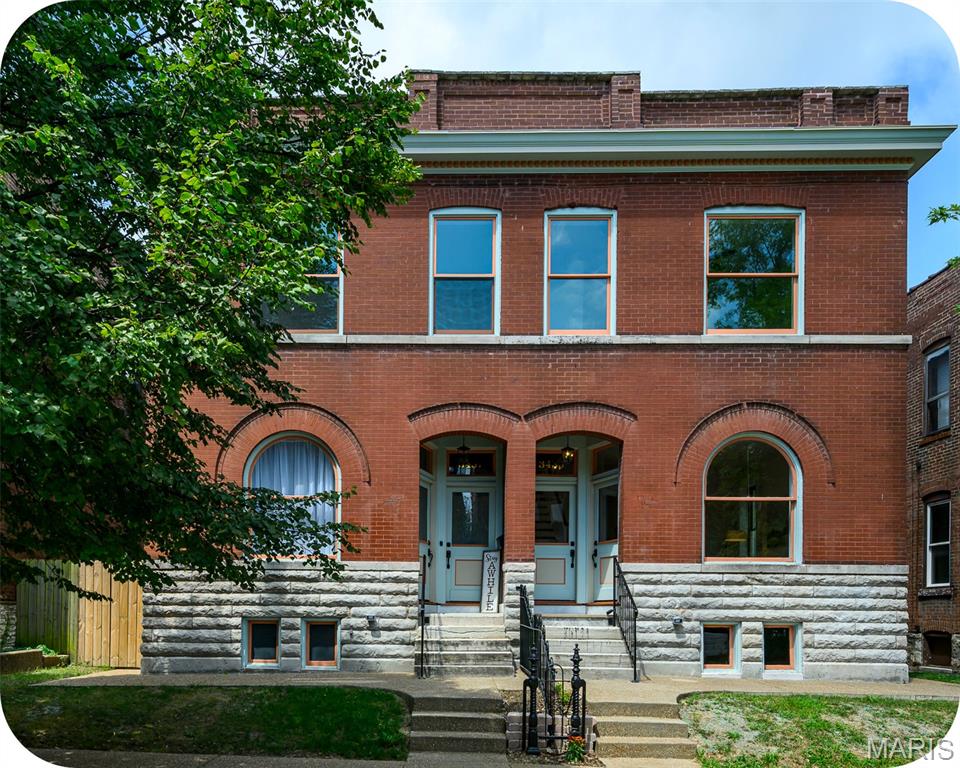
3435-37 Oregon Ave is a perfect example of the working-class properties that make up the Gravois-Jefferson Streetcar Suburb Historic District. Originally four 4-room apartments, it sits on a nearly intact block of single and multifamily properties, all with the ornate brick and sheet metal details that make us fall in love with St. Louis buildings.
This building had been vacant for many years and was in danger of losing the back wall due to moisture intrusion. Lintel and Cornice gutted the building, stabilized and tuckpointed the shell and built out two gorgeous and thoughtfully-designed townhomes.
4257 Northeast Drive
Tower Grove Park Pavilions
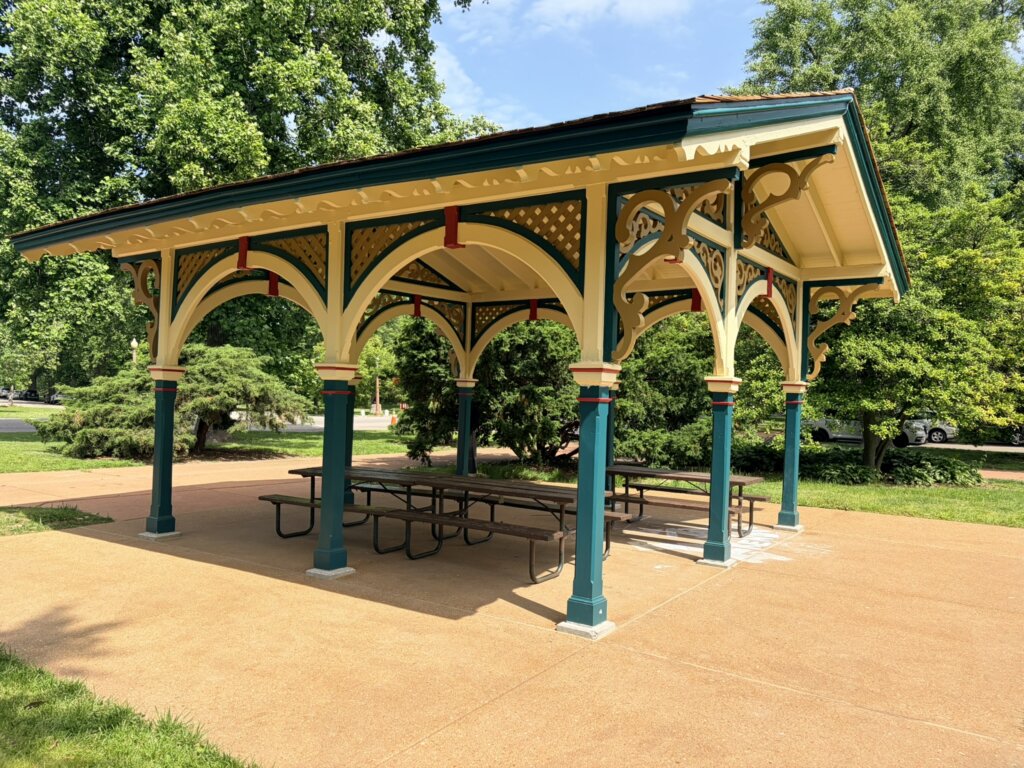
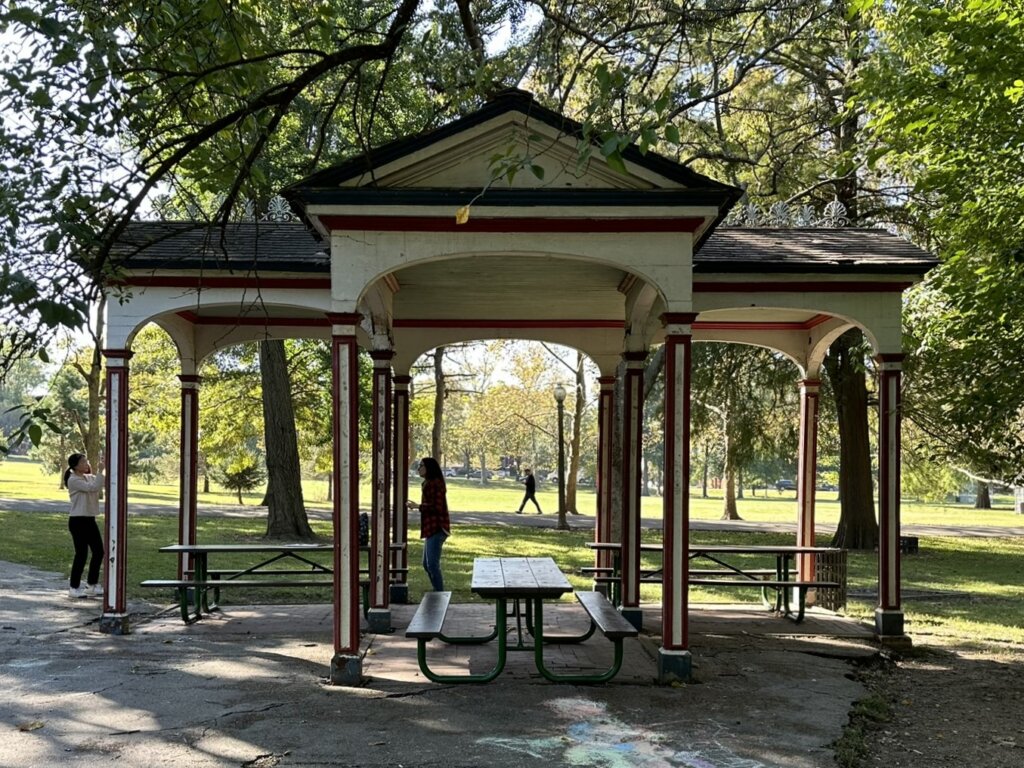
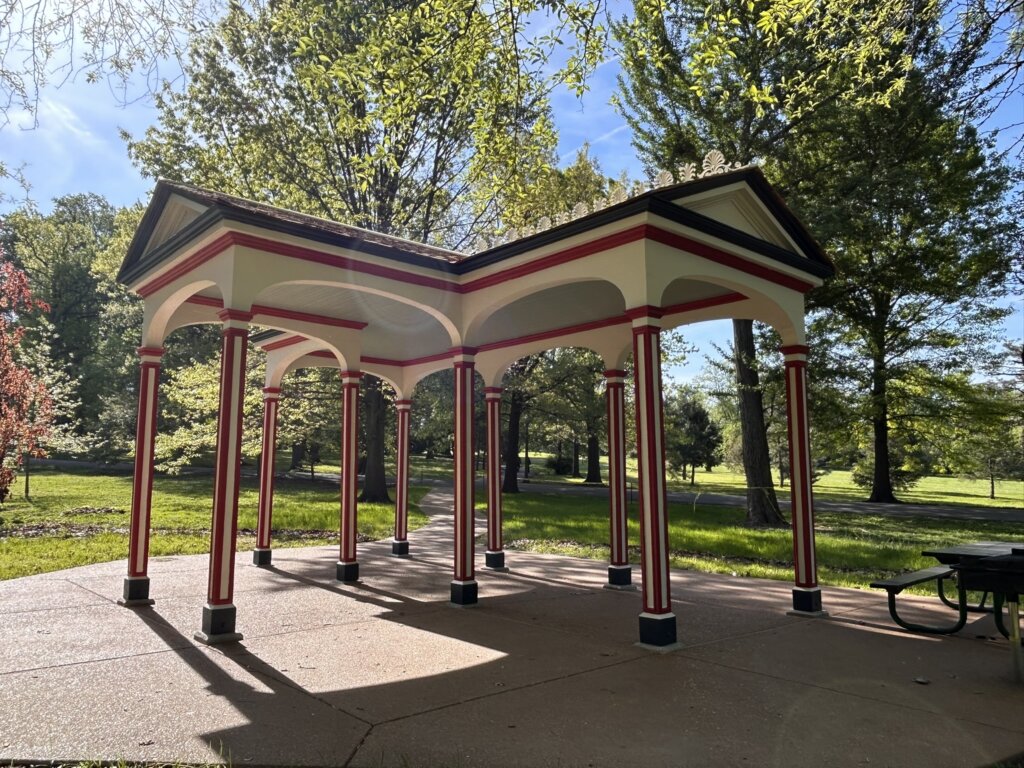
Owner: Tower Grove Park
Architect: Trivers
Contractor: LCG
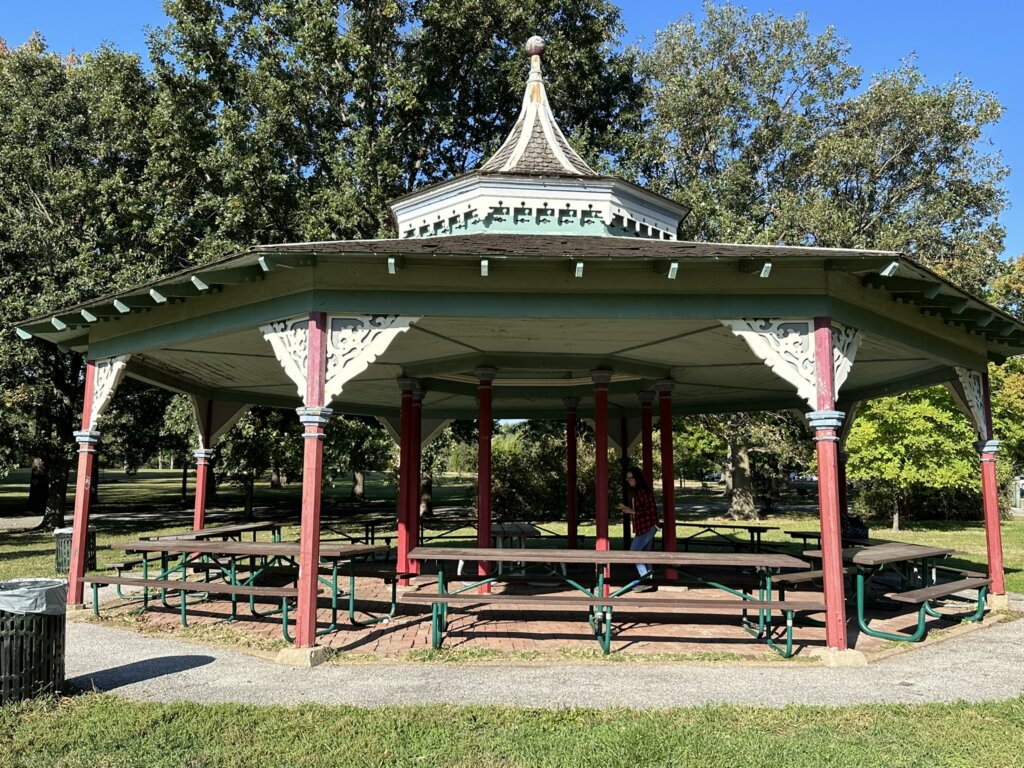
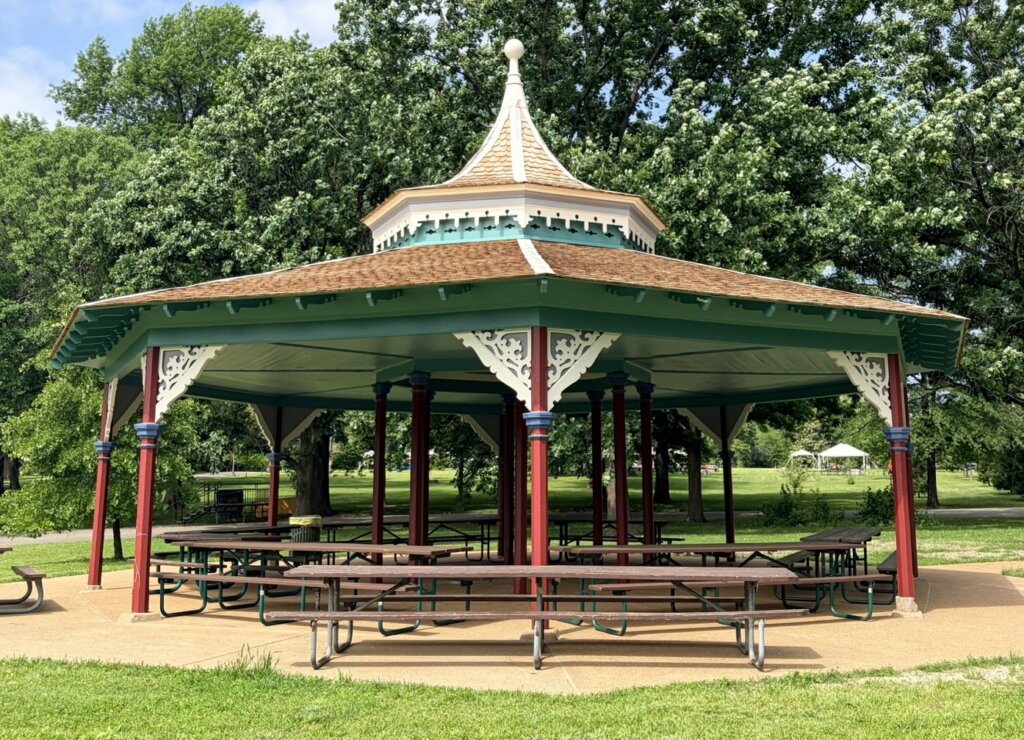
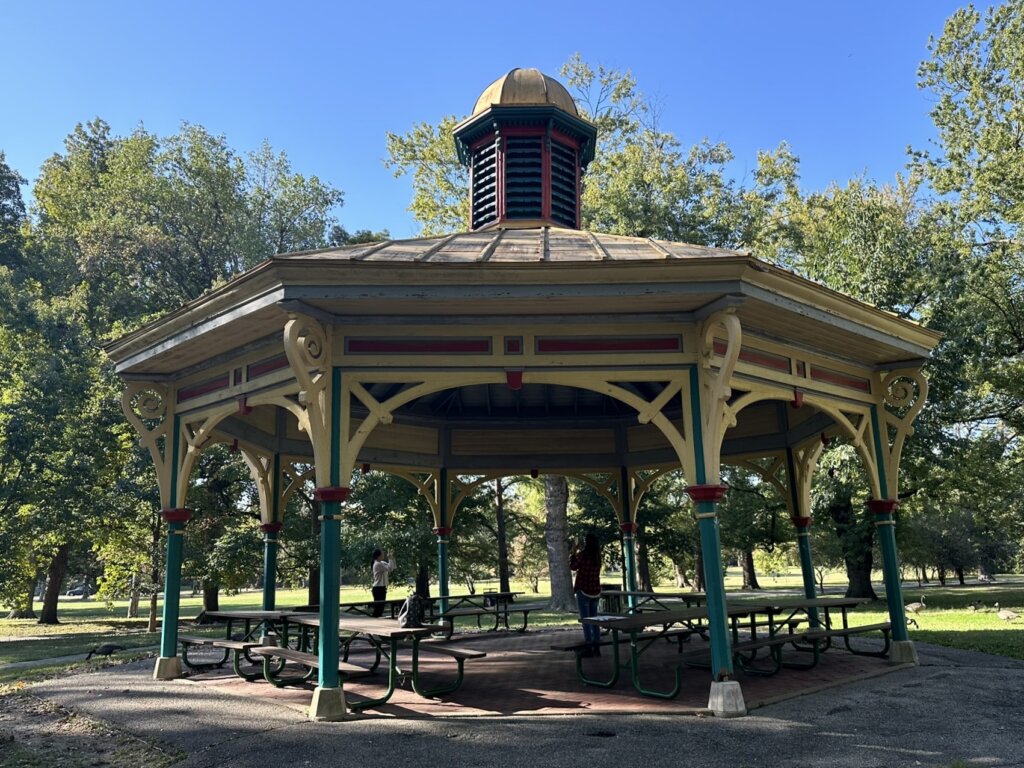
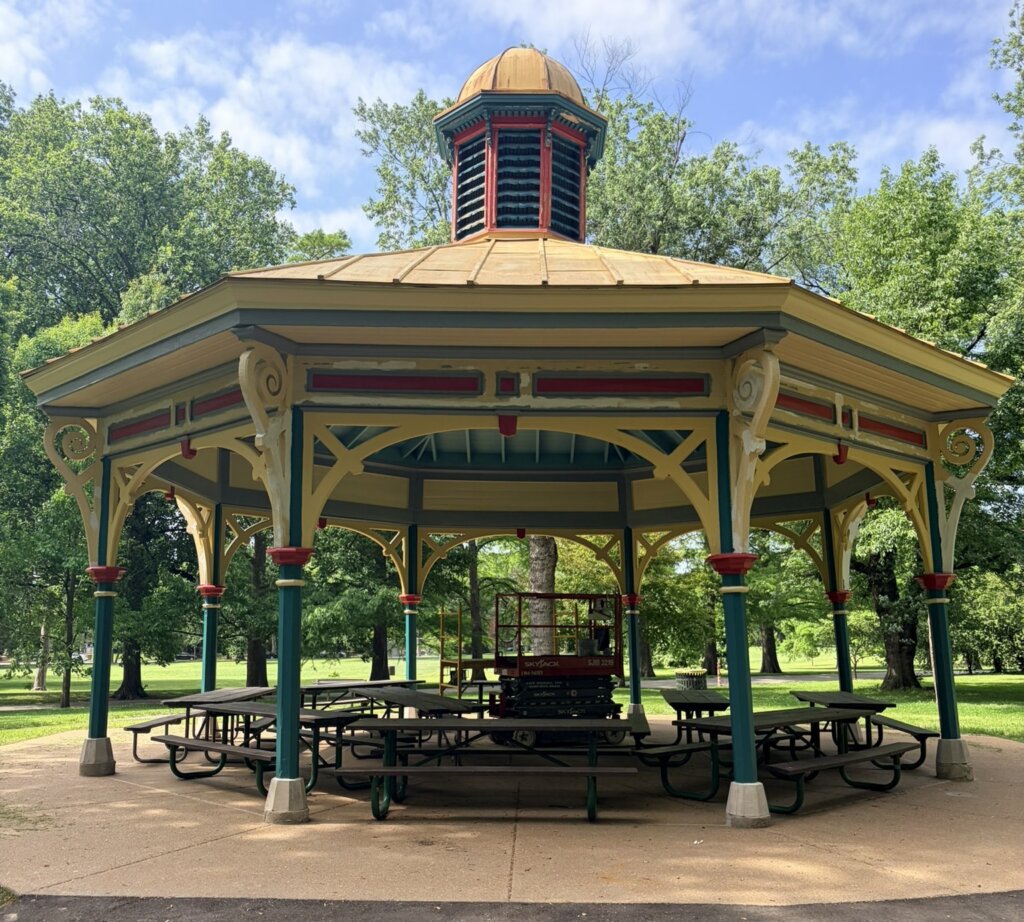
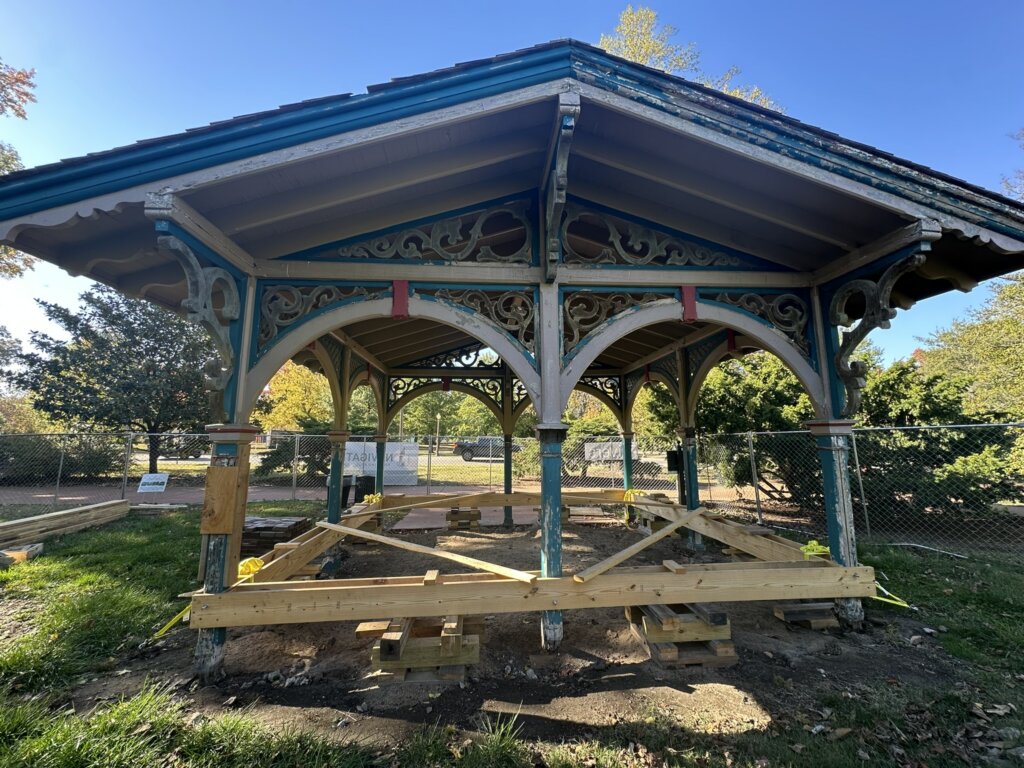
Tower Grove Park’s National Historic Landmark designation includes the largest collection of Victorian Pavilions of its kind in the U.S. The park previously restored two of the six pavilions (Turkish and Old Playground) at risk of being destroyed. Old Carriage, Lily Pond, Humboldt South, and Cypress South have now been restored.
All four pavilions had significantly deteriorated, and, as they reached about 150 years of constant use, needed substantial rehabilitation to continue to welcome several hundred thousand park visitors each year.
This project utilized historically sensitive preservation techniques as well as modern materials and methods to: Stabilize the structures, Repair and/or replace damaged members, remediate Lead paint as needed (important when you consider the number of kiddos crawling all over these things every weekend), return the structures to historical color schemes-Preserve the structures for their historic intended use while also ensuring accessibility for the public for decades to come.
The Old Carriage Shelter was designed in 1873 by Henry Thiele, and is situated a short distance south of Main Drive, near the Music Stand.
It was originally embellished with hitching posts and surrounded by a wooden fence in the “Chinese Chippendale” style utilized near both the Arsenal Street and Magnolia Street entrances to Tower Grove Park.
The fence and hitching posts were eventually removed.
Designed by Eugene L. Greenleaf in 1872, the Lily Pond Shelter has an eclectic style, combining some classical features with curvilinear scrollwork tracery and brackets. Although small, it is elaborately ornamented with pierced scrollwork on brackets, spandrels, and gables, with ironwork along the roof ridge. It is painted gold, brown, and green.
Like the Humboldt North Pavilion, the Humboldt South Pavilion takes its nickname from the statue of Alexander von Humboldt, near which it stands. Humboldt was a Prussian naturalist who lived from 1769 to 1859 and extensively explored the Americas.
Built in 1871, the year before the park opened, it is one of four shelters designed by Eugene Greenleaf for construction in pairs on either side of the main east-west carriage drive through Tower Grove Park. Each of the four pavilions held a well and was from the beginning intended to serve as a pleasant picnic spot. The shelters remain popular picnic spots. Like the northern pavilion, the Humboldt South Pavilion is octagonal; in contrast to its partner, the Humboldt South Pavilion’s cupola is louvered, and its color scheme is gold, olive, and pale yellow.
The Cypress South Pavilion and the identical Cypress North Pavilion take their names not from any material used in their construction, but from the grove of cypress trees that fills the nearby circle in the central drive.
The Cypress Pavilions were built in 1870-71 as well-houses and gazebos or summerhouses for the accommodation of basket parties. The design submitted by Eugene Greenleaf for the identical Cypress Pavilions was unusual for Tower Grove Park structures. The pair of small T-shaped open temples with plain tympana are lovely examples of the Classical Revival style.
The only embellishments are the red-white-yellow-and-blue color scheme known to have been popular in the Greek originals and the cast iron roof ornament in a fleur-de-lis pattern provided by the T.R. Pullis and Brother Company, a well-known St. Louis producer of iron-work.
3306 Washington Avenue
The Sovereign
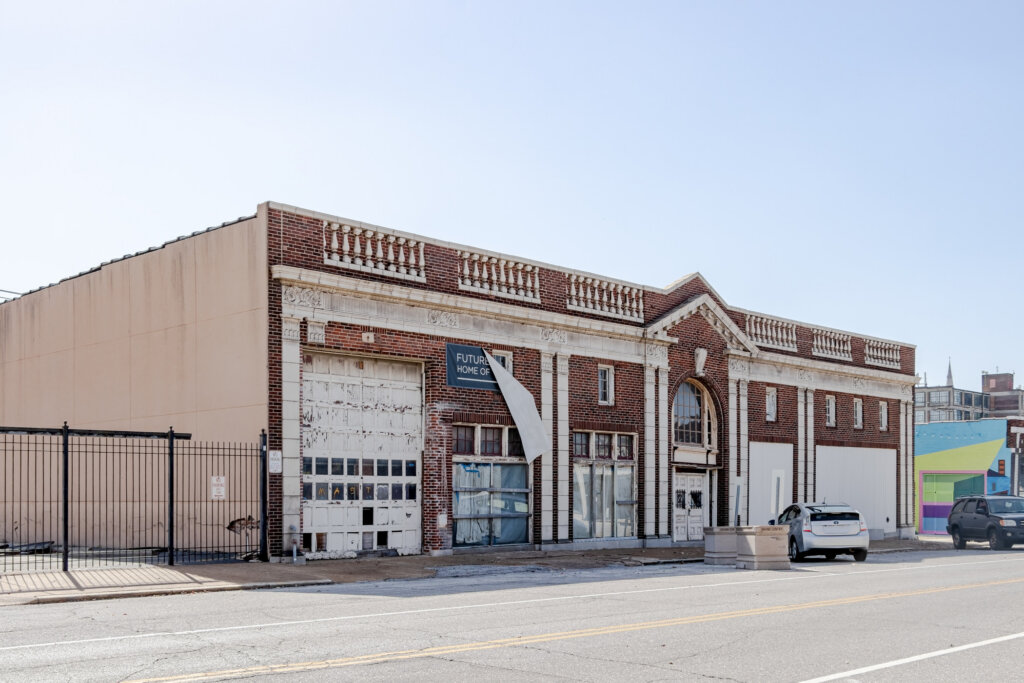
Owner: Leonard Street Arts Partners, LLC
Architect: Lawrence Group
Contractor: Integrate Construction Partners
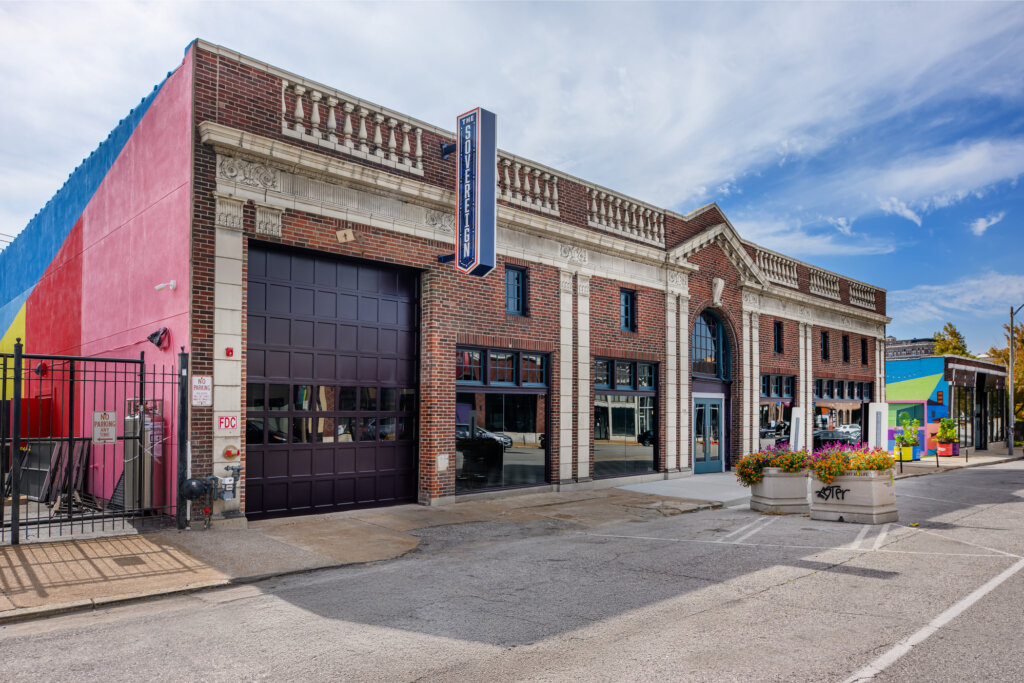
The Sovereign, located at 3306 Washington Ave. This project was designed by the Lawrence Group and completed for Leonard Street Art Partners by Integrate Construction Partners.
The building began its life as a speculative commercial site located within St. Louis’ “Auto Row.” Situated at 3306-3314 Washington Boulevard, the property was designed by Preston Bradshaw, a prominent local architect whose notable work includes the designs of the Chase Park Plaza Hotel, Coronado Hotel, and Mayfair Hotel, as well as numerous retail buildings tailored towards the contemporary auto industry.
Nearly continuously inhabited by a variety of automobile industry adjacent businesses and a printing press for over a century, the building was utilitarian, with very high ceilings and a beautiful 100 foot long terra cotta facade.
The locally owned and operated venue has welcomed a diverse array of talent since opening as The Sovereign in 2025. Boasting capacity for approximately 1,200 people within a thriving arts-centric community, the venue has already hosted national acts and local legends alike.
The project team sought to embrace the natural strengths of the building in its conversion to a live music venue. The large central warehouse space, with its soaring ceiling and mezzanine deck, was perfectly suited to function as a concert hall. The unique facade garage door has similarly been adapted as the venue’s new loading dock, efficiently funneling performers towards the stage as it once directed automobiles towards servicing operations.
This redevelopment has guaranteed the stability of a long-standing site while preserving its historic and industrial heritage, ensuring it will serve as a local landmark for generations to come.