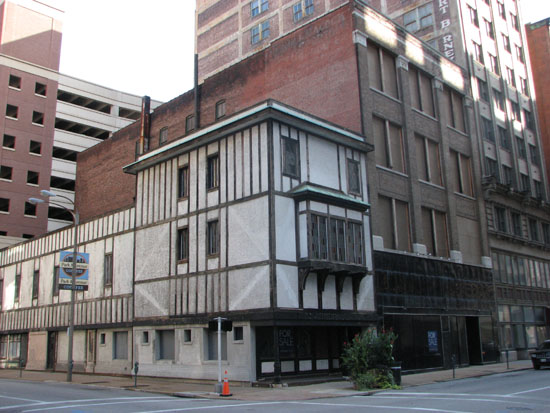
By Landmarks Association, July 2026
On behalf of our members, donors and generations of both SLPS students and
preservation-minded Saint Louisans past and future, we at Landmarks are heartened by
the thorough and forward-thinking nature of SLPS’ Future Ready plan.
Faced with a difficult and complex situation created by decades of demographic shift,
strategic disinvestment and structural racism, we believe SLPS leadership has put
together an impressive plan for increasing their commitment to students and teachers
via wraparound services and improved efficiencies, hedging against financial and
demographic headwinds, and preserving and adapting historic SLPS buildings currently
in-service.
We are, of course, especially interested in SLPS’ ambitious implementation plans for
former facilities–SLPS and the city will be best served if the buildings remain in
community use, whether by SLPS, in public-private partnerships or through sale to
outside developers.
For a very long and detailed list of cultural, historical, financial and environmental
reasons we believe these buildings should remain in service to the public. Further, we
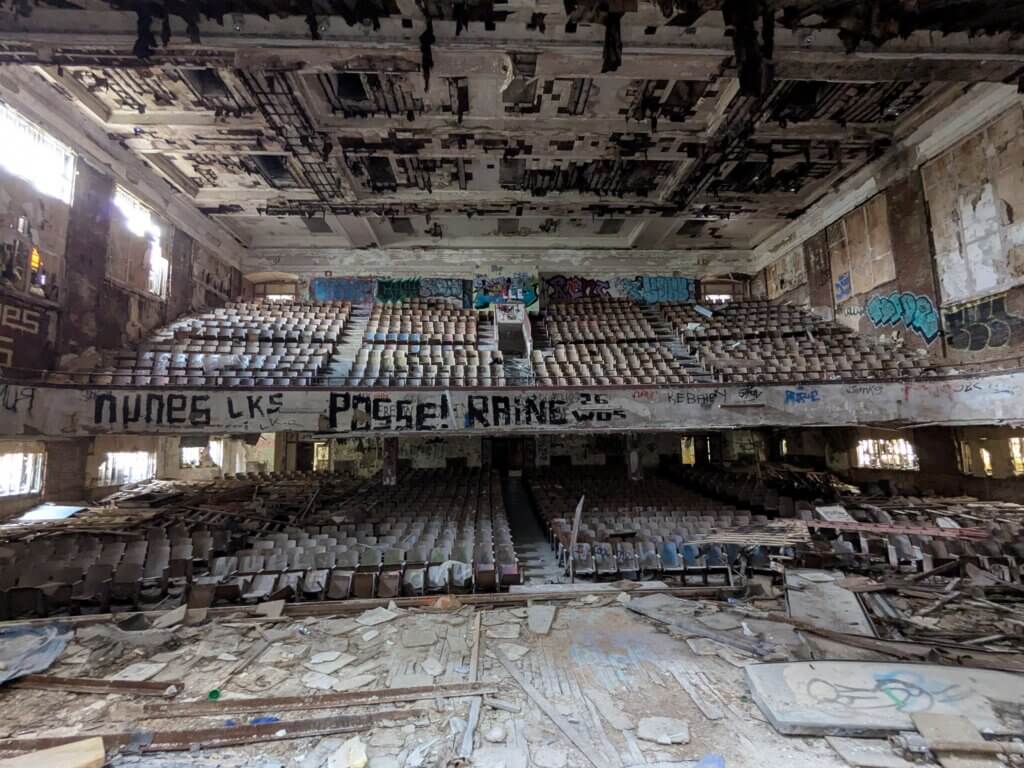
know that the second these buildings are vacant, they become targets for crime,
vandalism and theft. This kicks off a precipitous decline in the building’s safety, stability
and appeal, the building’s ability to return to public service, and the quality of life in the
surrounding neighborhoods.
We know that SLPS understands how to make the best possible decisions for their
students in this very challenging situation so we do not have any recommendations on
the plan alternatives. However, we urge SLPS to consider the following steps to
safeguard their buildings and their students:
Establish an outside real estate commission
Just as Saint Louis has relied on the expertise of SLPS to educate generations of
students, we believe SLPS should rely on the expertise of outside counsel in real estate matters, and recommend an outside Real Estate Advisory Commission that can review
and evaluate proposals for adaptive reuse, public-private partnerships and third-party
sales, and then pass along research and recommendations to SLPS leadership and the
Board of Education.
We believe commission members should be a mix of real estate, legal economics,
urban planning and historic preservation specialists and should be appointed in
consultation with community stakeholders like City Hall, the AFT, SLDC, parent
organizations, and community organizations.
For specific duties, the Commission would assist SLPS with implementation plans for
re-adapting schools, creating and implementing public-private partnerships, reviewing
development proposals, providing technical advice/assistance on real estate matters.
Additionally, the Commission could assist with the two recommendations below.
Vacancy Preparation
We recommend adopting a set of best practices for buildings that will close and
experience any sort of vacancy as part of the FutureReady process. Our initial thoughts
on best practices include a decommissioning plan and a plan for site security.
We recommend SLPS develop a decommissioning protocol for any building that will
experience a period of vacancy. This protocol would include removing valuable
scrappable metal (like gutters, flashing and HVAC/air handling equipment) from the roof
and roof-adjacent surfaces. The goal is to reduce damage to the roof/water intrusion.
Additionally, the decommissioning protocol should include boarding/securing access
points to the roof and access points not easily visible from the street. The protocol
should also include regular maintenance checks, devices for remote alerts on moisture
intrusion and an emergency fun for responding to moisture intrusion.
Additionally, we recommend SLPS plan for site security at any buildings that will
experience vacancy in order to make sure buildings maintain the appearance of
continuous use, including landscaping, coming up with interim community use or
piecemeal development and the use of security systems like alarms, cameras and
potentially private security or use of the buildings as police substations.
Public/Private Partnerships
We are excited about the energy and vision SLPS leadership brings to the problem of
surplus school buildings and think public/private partnerships are a fantastic alternative
to the sale of SLPS properties to third parties, especially when many buildings hitting
the market at once might create an oversupply issue and lead to vacancy.
We believe phased approach to closures with a long development runway for each
potential closure starting as soon as possible. We recommend SLPS develop a
streamlined process for preliminary steps like accessing/viewing building and adopt a
minimal-qualifications RFP model rather than the current MOU model. We urge
leadership to remove unnecessary obstacles in the earliest stages of the process and
make the process simple and easy so that SLPS maximizes potential bids/partners.
For sale to third party
We had a very productive conversation with SLPS leadership about the difficulties SLPS
has experienced selling properties to third parties. We understand SLPS’ desire to
avoid stalled projects and disharmonious development but we urge SLPS to develop
internal guidelines for vetting developers and efficiently disposing of properties. Some
of this involves education and communication between SLPS leadership, the SLDC and
the development community, some of this involves adopting best practices from school
districts that have developed successful pipelines for transitioning their properties into
community assets.
A streamlined RFP process for sale to outside parties would be ideal for ensuring quick
and painless transitions. We believe SLPS can balance maintaining safeguards to
ensure timely project completion with an understanding that the real estate development
process is necessarily uncertain and mercurial.
We also urge SLPS to consider allowing piecemeal development–if someone can
occupy and redevelop part of the space, that might make a good partnership
opportunity–the goal is to keep the buildings in use so they don’t become targets for
crime, theft, or vandalism.
These buildings are worth the absolute most to SLPS (and to a developer) the day
before they stop being schools. The less remediation that must be done, the faster the
redevelopment timeline will be, and the less a developer has to spend on remediation,
the more affordable the property will be for end users.
By proactively working to ensure adaptive reuse, we can buoy Saint Louis’ property tax
base, develop innovative new residential and commercial spaces, and preserve some of
the largest and most beautiful public infrastructure in the country.
How to get involved
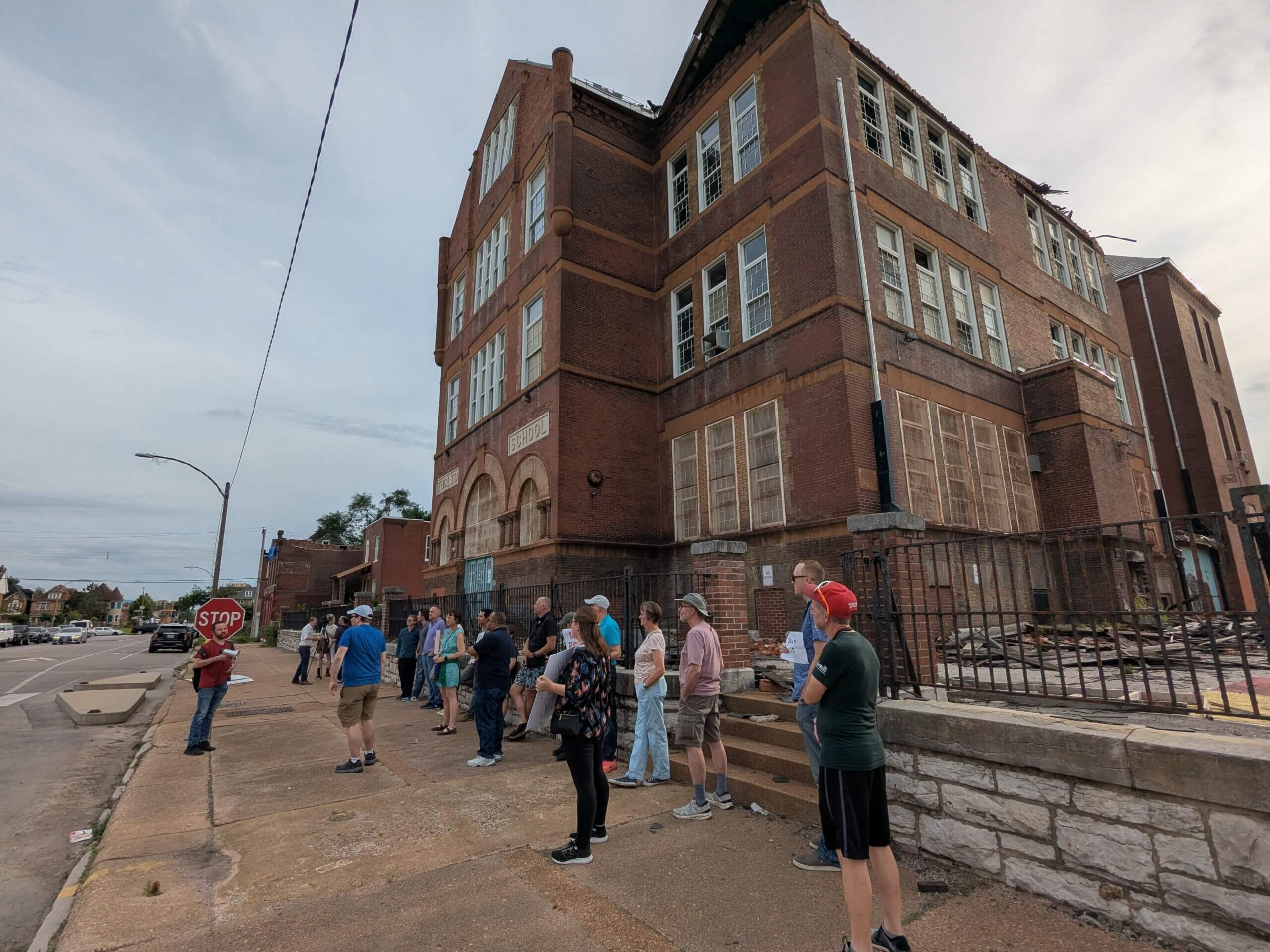
SLPS organized three listening sessions, two of which are upcoming. We ask our
members to attend one and politely and positively share their priorities regarding the
preservation of our historic school buildings.
– Wednesday, July 8 at Vashon High School from 5-7 p.m.
– Wednesday, July 15 at Central Visual and Performing Arts High School from 5-7 p.m.
– Wednesday, July 22 at Central Office from 5-7 p.m.
Additionally, if you have ideas, concerns or questions, please contact us to discuss!